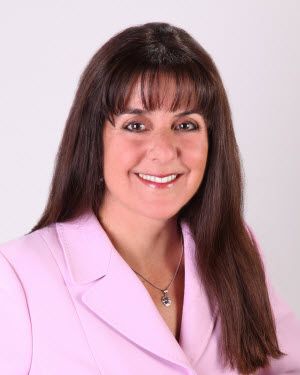
 Dr.
Maryann Cusimano Love is an award winning international educator and New
York Times Best Selling author. Dr. Cusimano Love has spoken to audiences
from suburban pre-schoolers, to inner city children, to military officers
and diplomats and CNN International. A winner of Harvard University’s
Pew Faculty Fellowship for teaching, and Catholic University’s Teacher
of the Year Award, Maryann Cusimano Love is an effective presenter who
favors participatory techniques. Maryann has been working with children
since she was a teen–as a clown, story-teller, singer, puppeteer,
and caregiver. You Are My I Love You and You Are My Miracle
arose out of her work with children, especially the PeaceKids group in
the Sursum Corda housing project in Washington, DC. Maryann lives on the
Chesapeake Bay with her husband, Richard Love, and their daughter Maria.
She is a tenured associate professor of international politics at Catholic
University, and a member of the Authors Guild and the Society of Children’s
Book Writers and Illustrators.
International Affairs Background
Dr. Maryann Cusimano Love teaches graduate and undergraduate courses in
globalization, terrorism, security, non-state actors, ethics and U.S.
foreign policy at both the Pentagon and Catholic University (where she
is a tenured professor in the Politics Department). Dr. Cusimano Love
has been advising Canadian, Caribbean, and U.S. government and private
sector leaders on globalization, terrorism, and homeland security since
1998, as a member of the Council on Foreign Relations. Dr. Cusimano Love
serves on the International Policy Committee, advising the U.S. Catholic
Conference of Bishops on international affairs. She serves on the Board
for the Jesuit Refugee Service, the Advisory Board for the University
of Notre Dame Kroc Institute Catholic Peacebuilding Network, the Advisory
Board for Georgetown University’s Project on Globalization and Culture,
and is a co-founder of Catholic University’s Center for International
Social Development. She serves or has served as a consultant with the
Franciscan Office for Justice and Peace, the American Assembly Project
on Rethinking International Institutions, the National Intelligence Council,
the Vatican Pontifical Council for Justice and Peace, the UN working group
on Human Trafficking, and the U.S. Institute of Peace advisory group on
conflict resolution and foreign policy. She was a fellow at the U.S. Naval
Academy's Center for Military Ethics 2002-2003. Recent books include Beyond
Sovereignty: Issues for a Global Agenda (Thomson/ Wadsworth, 2003 and
3rd edition 2006), Morality Matters: Ethics and the War on Terrorism (forthcoming),
and the best selling children’s books, You Are My I Love You (Penguin
Putnam Philomel 2001), published in English, German, Japanese, Korean
and French, and You Are My Miracle (Penguin Putnam Philomel 2005). She
has given invited speeches to the United Nations UNICRI working group
on Human Trafficking, the Carnegie Endowment for International Peace,
the Brookings Institution, Notre Dame University Law School, Georgetown
University, the University of Milan, the University of Ireland at Galway,
the United States Naval Academy, the McCormick-Tribune Foundation- Cantigne
Conference, the Conferences of Latin American, Canadian, and U.S. Bishops,
and the Christian Council for Arms Control, Defense, and Disarmament,
an association of senior defense and foreign service officers from NATO
countries. She is a former governing board member of Women in International
Security, and is the founder of the Political Psychology Section of the
American Political Science Association. She received her PhD in International
Relations from Johns Hopkins University, her MA from the LBJ School at
the University of Texas, and her BA from St. Joseph’s University,
Philadelphia, PA. Dr. Maryann Cusimano Love married Dr. Richard A. Love
in 2000, and welcomed their first child, Maria Isabella Love in 2003.
Frequently Asked Questions
How did you become a writer?
I wrote my first books when I was seven years old in the second grade,
and I haven’t stopped since. Shortly after I learned how to write
straight enough to keep the words in a line on the page, I wrote and illustrated
books then bound them myself, sewing the spines with yarn. When I was
about ten I asked my mother to drive me an hour away to a children’s
book writing workshop at Villanova College in Philadelphia, offered by
Jan and Stan Berenstain, authors of The Berenstain Bears books. The classroom
was filled with college students and housewives hoping to be writers,
and a smattering of actual published authors. I was by far the youngest
there, but I loved meeting writers and learning about the craft. When
asked “what do you want to be when you grow up?” I always
answered “I want to be a writer who lives in New York City and has
a white kitten named snowball.” I’ve never lived in New York
City or owned a cat, but the rest of the dream has come true!
What do you like most about writing children's books? How does it compare
to the other writing you do?
Children’s writing is like skiing a four diamond slope, rock climbing
in Colorado, or scuba diving in Hawaii-- as fun as it is demanding. Anything
can happen when I sit down to write; that’s exhilarating and freeing
and sometimes a bit scary. You aren’t boxed in by facts or chronology,
and can follow your imagination. But you have to be able to tell your
story in a very brief format. Children’s picture books are 14 double
page spreads, no exceptions, no cheating, so it is a very disciplined
form of writing. Each word counts. After wrestling with each word and
careful pruning, the writing then goes to the artist, whose pictures have
to play against your words, adding harmony to your melody. Ironically
the books are quite short, but production is long. You Are My I Love You
and You Are My Miracle each took over four years from writing to published
book. If the book is a hit, it is very shelf-stable, outlasting the day’s
headlines as a favorite on the bookshelf for years and many readings.
That’s very different from the adult nonfiction books I write, on
themes from terrorism to globalization and ethics. These books can be
hundreds of pages long (whereas one thousand words is long for a children’s
picture book). But theme and method are very limited. You are restricted
to your research, to reporting what has happened more than imagining what
could happen. While the research and writing may take years, production
takes less than six months, since events start dating the book as soon
as you set down your pen.
If it weren’t for the children’s writing, I probably would
not be able to continue to write and teach on such heavy topics as trafficking
in women and children, refugees, famine and war. While there are some
bright spots in international affairs, there is a lot of bad news to deliver.
Thirty thousand children a day die from hunger and disease. I shudder
whenever I get a phone call for a CNN media appearance, because it means
that something terrible has happened somewhere in the world, innocent
people are dead and they are looking for someone to explain the bad news.
It can wear you out. Children’s writing helps restore the balance,
and reminds me of the hope and wonder in life. I also occasionally get
to write a story with a happy ending.
Where did you get the idea and/or inspiration for You Are My I Love You?
I was driving in to teach at the University one morning, half awake, and
I couldn’t listen to one more minute of the news. I clicked off
the radio, and was thinking about the beautiful kids I worked with at
the Sursum Corda housing projects in Washington, DC. One in six children
in America lives in poverty, and thousands of them live just blocks from
the U.S. Capitol Building. They are raised mostly by single moms or grandmothers
and aunts, who are working hard to put food on the table, and are short
on time and money. The parents feel badly that they cannot afford Christmas
gifts or the trendy sneaker or video game for their kids, but what their
kids really want is their time. The same was true for the upper income
children I served as a child care provider, who were starved for their
busy parents’ time and attention. All these kids lit up whenever
we spent time doing the simple things, walking outside, reading, baking.
As I was thinking all this, on autopilot through Washington traffic, there
appeared this lovely verse in my head: “I am your parent; you are
my child. I am your quiet place, you are my wild.” I got to the
University parking lot and stayed in my car scribbling against the car
dashboard. Students gave me odd looks streaming past on their way to class,
but I wanted to capture the magic song that was playing in my head about
the ying/ yang of the adult/ child relationship, the parent providing
stability and constant love, the child bringing mischief and wonder. Later
I worked, reworked and refined it, and the book became a hit.
What about for You Are My Miracle?
Growing up in Bethlehem, Pennsylvania, the Christmas City, I was drawn
to writing a Christmas book, and my editor Michael Green encouraged a
sequel to You Are My I Love You. There was more in my heart on the subject
of the parent/ child relationship. The new life of a child is a miracle
that we are privileged to be part of, and what better time to reflect
on that wonder than Christmas? The holidays can be stressful; everywhere
we are bombarded with the message that if we love our families we will
buy them lots of stuff. Yet my happiest childhood Christmas memories are
not of gifts but of simple time spent together. Television programs on
home make-overs and storage solutions, plus the size of our garbage dumps,
show we are drowning in stuff. Yet the growth of the simplicity movement,
and of Christian groups trying to return to the meaning of the season,
show that there are also people who agree with Dr. Seuss that Christmas
“doesn’t come in a store. Christmas, perhaps, means a little
bit more.”
Does your childhood show up in your picture books?
Absolutely, although my supposed status as a “grown up” hasn’t
cured me of blowing dandelion wishes or stomping in puddles. As the child
of an educator and a homemaker, we never had much money growing up, but
we enjoyed lots of fun that was free, the kinds of activities that make
their way into my books. Many people are surprised to learn that my first
children’s books were written before I had children. But if you
can’t really remember what it felt like to be under four feet tall,
you probably shouldn’t be writing for children. Ursula Nordstrom,
a famous children’s book editor who edited Maurice Sendak’s
Little Bear and Where the Wild Things Are (among other classics), put
it well. People asked how she could edit children’s books as she
did not have children of her own, and she always replied that she was
once a child, and had not forgotten a thing.
What makes you and Satomi Ichikawa such a great team?
Satomi and I both collect dolls and toys. I think it shows neither of
us have really grown up, we both are children at heart, and love to play
and retain a child’s perspective in our work. Satomi’s work
is fresh, warm and engaging. When my editor Michael Green and I were considering
perspective artists, there were lots of good folks to choose from, but
none that really clicked. We both had the same reaction to Satomi’s
work– she’s a terrific artist and this is a wonderful fit.
When you're not writing, how do you spend your time?
With my toddler Maria and my husband Rich. We are blessed to live on the
Chesapeake Bay, and love to spend time on the beach, gathering shells
or wading in the waves, riding bikes and checking out the herons, osprey
and ducks. I play guitar and Rich and Maria play harmonica, and we sing,
sometimes together and on key. We like to cook, especially if chocolate
or seafood is involved. We travel for work, but try to make some of it
family time, and try to visit family along the way in Colorado, Hawaii,
Pennsylvania, Virginia, and New York. Before babies we used to ski, scuba
dive, rock climb and hike. These days we try to catch up on lost sleep
whenever possible.
What were some of your favorite books when you were growing up?
I was (and still am) an avid and equal opportunity reader. I read my way
through the public libraries, from A.A. Milne to Charlotte Zolotov. As
a dark complected Italian-Irish American, I adored Don Freedman’s
Corduroy books and everything by Ezra Jack Keats. Growing up in white
neighborhoods where I was teased for being a “wop,” I appreciated
seeing pictures of kids who looked more like me. I loved Sesame Street
and its spin-off books, The Berenstain Bears books by local authors Jan
and Stan Berenstain, Maurice Sendak, Dr. Seuss, Judy Blume, Laura Ingalls
Wilder, Katherine Paterson, Richard Peck, Ray Bradbury, John Knowles,
and Madeleine L’Engle. John Steinbeck and Ernest Hemingway were
favorites for high school book reports, for obvious reasons.
What's your recipe for success as a writer?
You have to be brave, brave enough to put some precious part of yourself
out for all to see and love or leave. You also have to love writing, know
how to do it, and practice every day. It’s very unfashionable to
say, but email, instant messaging, and blogs have allowed bad writing
habits to flourish and multiply like mold. Good writing starts with the
essential elements, subjects and verbs that shake hands and agree, punctuation
that knows how to direct the traffic of a sentence. From there you need
a passion for your stories that will sustain you through the fourth rewrite.
And you must believe in yourself and your books (especially when inevitable
rejection comes your way), and practice dogged persistence. I say dogged,
because you have to dig in, chew on your work and not let go like a dog
on a bone. Persistence is mandatory; slobbering is optional.
|